
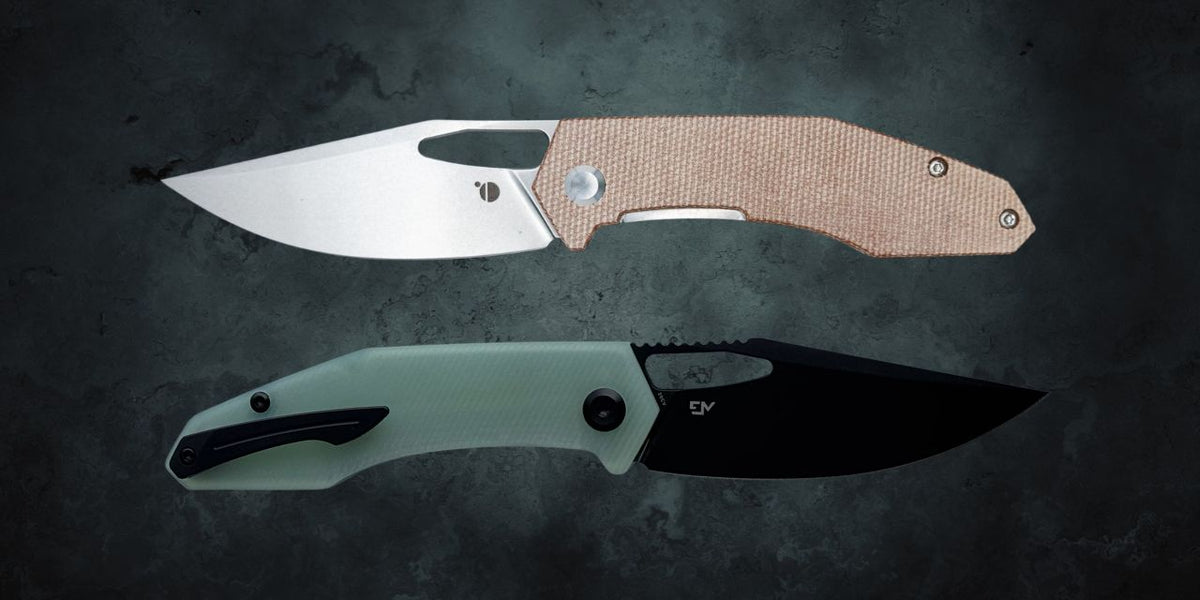
When shopping for a pocket knife or fixed blade, you'll often come across two popular handle materials: G10 and Micarta. Both are widely used in the knife industry, from affordable everyday carry knives to high end custom designs.
At first glance, they can look fairly similar. Both are lightweight, durable, and available in a variety of colors and textures. However, their construction, feel, and long term characteristics are different.
First, let's learn about each material separately.
What Is G10?
G10 is a composite material made from layers of woven fiberglass cloth impregnated with epoxy resin. These layers are compressed under heat and pressure, creating a dense, rigid material that's exceptionally strong for its weight.
Originally developed for electrical insulation applications, G10 eventually became a popular material in industries where strength, dimensional stability, and moisture resistance are important.
Knife manufacturers use G10 because it offers several practical advantages. It's relatively lightweight, resists moisture extremely well, and can be machined into complex shapes and textures without sacrificing structural integrity. This is why we have used G10 in the Callisto Series, lately in the Jade G10 Large Callisto.

One of G10's most recognizable characteristics is its consistency. Unlike natural materials such as wood, G10 doesn't have grain patterns or variations that significantly affect its appearance from one piece to another. This makes it especially useful for manufacturers looking to achieve uniform quality across a large production run.
Advantages of G10
- Excellent resistance to water and moisture
- Lightweight yet structurally strong
- Highly resistant to everyday wear
- Dimensionally stable under normal conditions
- Available in numerous colors, patterns, and textures
- Relatively easy to clean and maintain
G10 is particularly popular on modern folding knives, where manufacturers can use it to create thin, precisely machined handle scales with consistent tolerances.
What Is Micarta?
Micarta is another type of composite material, but instead of fiberglass, it's typically made from layers of fabric or paper bonded together with resin under heat and pressure.
The most common types used in knife handles are canvas Micarta, linen Micarta, and paper Micarta.
Although these materials share the same general manufacturing concept, they can look and feel noticeably different.
Canvas Micarta uses a relatively coarse fabric weave that can create a pronounced texture when machined. Linen Micarta uses a finer weave, resulting in a smoother, more refined appearance. Paper Micarta generally offers an even more uniform surface.
One of the biggest reasons knife enthusiasts appreciate Micarta is its character.
Unlike G10, which tends to maintain a relatively consistent appearance, many Micarta handles gradually change color as they're handled. Oils from your hands, moisture, and normal use can darken the exposed fabric, producing what enthusiasts often refer to as a patina. We use Micarta in the OG Callisto and our latest release, the Apophis.

Advantages of Micarta
- Strong and durable composite construction
- Comfortable feel, especially with fabric based varieties
- Available in different weaves, colors, and finishes
- Can develop a distinctive appearance over time
- Good resistance to everyday impacts and wear
- Popular for both traditional and modern knife designs
Micarta is especially common on fixed blade knives, although it's also widely used on folding knives.
G10 vs Micarta: Which Has Better Grip?
Grip is one of the most frequently discussed differences between G10 and Micarta, but the answer isn't as simple as declaring one material better.
Surface texture often matters more than the material itself.
G10 can be machined with aggressive textures and patterns to provide excellent traction. A deeply textured G10 handle can offer a secure grip, even with wet hands or while wearing gloves. When designing the Large Callisto in Jade G10, we incorporated additional milling into the handle to improve traction and provide a firmer, more confident grip during demanding cutting tasks.

However, smooth or polished G10 can feel considerably more slippery.
Micarta behaves somewhat differently. Canvas and linen Micarta can expose portions of their underlying fabric weave when machined or finished, creating a tactile surface that many users find comfortable and secure.
Coarse canvas Micarta can provide excellent traction, while highly polished Micarta may feel nearly as smooth as polished G10.
Some users also prefer the feel of unpolished canvas Micarta when their hands are damp, although actual performance depends heavily on the finish, texture, and contaminants involved.
Ultimately, neither material guarantees better grip. A well designed handle with appropriate finishes and surface texture will generally be more important than the choice between G10 and Micarta alone.
Which Material Is More Durable?
Both G10 and Micarta are exceptionally durable for typical knife applications. They resist cracking, deformation, and general wear much better than many people might expect from nonmetallic materials.
G10 has an advantage when it comes to moisture resistance and dimensional consistency. Its fiberglass and epoxy construction absorbs very little water, making it particularly suitable for environments where the knife may frequently encounter rain, humidity, or moisture.
Micarta is also moisture resistant, but its characteristics depend on the fabric, resin, and manufacturing process used. Some exposed fabric surfaces can temporarily absorb moisture or oils, resulting in changes to their appearance. That doesn't mean Micarta is unsuitable for outdoor knives. In fact, it's one of the favorite handle material for hunters and outdoorsmen.
For most everyday carry applications, the practical difference in durability is unlikely to determine how long your knife lasts. In other words... you can't go wrong with either choice.

Does Micarta Require More Maintenance?
Generally speaking, G10 is easier to keep looking the same over time.
Because its surface is highly resistant to moisture and oils, cleaning usually requires little more than mild soap, water, and a soft brush or cloth.
Micarta can require slightly more attention, particularly if you want to preserve its original appearance.
Fabric based Micarta may darken as oils from your hands accumulate on its surface. This is especially noticeable on lighter colors such as natural canvas, tan, or green.
Some knife enthusiasts enjoy this aging process because it gives their knife a more personalized appearance. Others prefer a consistent finish.
If you want to restore a cleaner appearance to Micarta, gentle cleaning with mild soap and water can often remove accumulated surface oils and dirt.
It's important to avoid harsh chemicals or aggressive cleaning methods that could damage the finish or surrounding knife components.
Neither material requires elaborate maintenance, but Micarta is more likely to show visible changes from regular handling.
Which Is More Expensive: G10 or Micarta?
There's no universal answer. Both materials are available in different grades, colors, thicknesses, and constructions, all of which affect their cost.
Standard G10 is often an economical choice for production knife manufacturers because it's widely available and can be machined consistently. Micarta pricing varies depending on the type of fabric, resin, manufacturing quality, and appearance.
However, the raw material is only one part of the final cost. Machining intricate patterns, creating complex contours, polishing surfaces, and maintaining tight manufacturing tolerances can significantly influence the cost of a finished handle.
G10 vs Micarta: Side by Side Comparison
| Feature | G10 | Micarta |
|---|---|---|
| Construction | Fiberglass and epoxy resin | Fabric or paper and resin |
| Weight | Lightweight | Lightweight |
| Moisture resistance | Excellent | Very good, varies by construction |
| Grip | Depends on surface texture | Depends on weave and finish |
| Durability | Excellent | Excellent |
| Appearance over time | Generally consistent | May darken and develop patina |
| Maintenance | Very low | Low |
| Common applications | Folding knives and fixed blades | Fixed blades and folding knives |
Which Material Should You Choose?
The decision ultimately comes down to what you value in a knife handle.
G10 is an excellent choice if you prefer a modern, consistent material that requires almost zero maintenance. Its stability and versatility make it suitable for everything from lightweight everyday carry knives to hard use outdoor tools.
Micarta is equally capable, but it offers a somewhat different experience. Many enthusiasts appreciate its fabric based texture, its more organic appearance, and the way certain finishes develop character through regular use.
There's also an aesthetic consideration.
G10 often complements modern, technical knife designs, while Micarta can give a knife a warmer or more traditional appearance. Of course, both materials can be used successfully in either design style.
Neither material is inherently superior for every application.
At Orbital Knives, we believe material selection should support the overall design and intended purpose of a knife. A good handle isn't defined by a particular material. It's defined by how well its construction, shape, and finish work together.

Leave a comment
This site is protected by hCaptcha and the hCaptcha Privacy Policy and Terms of Service apply.