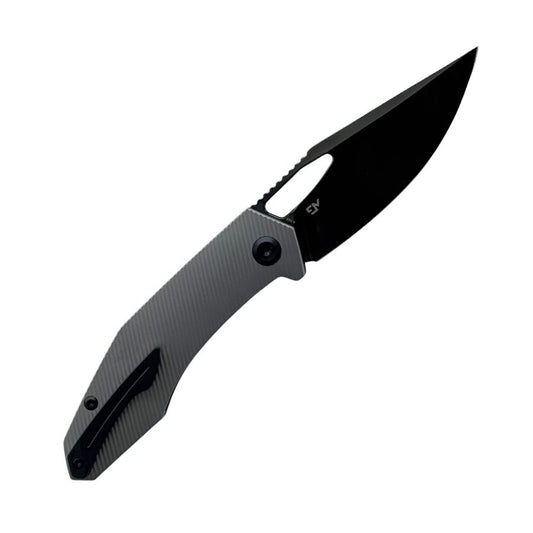
Buying Your First Premium Pocket Knife? Here’s What You Should Know
Buying your first premium pocket knife can feel surprisingly complicated.
Once you move beyond inexpensive folding knives, you start seeing terms like CPM 20CV, titanium, nested liners, milled clips, DLC coatings, and more. Prices can jump quickly too, making it hard to know what you are actually paying for.
The good news is that buying a premium folding knife does not need to be complicated. You just need to know which features actually matter.
What Makes a Pocket Knife “Premium”?
There is no official price where a pocket knife suddenly becomes premium.
Generally, premium knives combine better materials, tighter manufacturing tolerances, thoughtful design, smoother action, and a higher level of fit and finish.
That may include:
- Premium blade steels
- Titanium, aluminum, carbon fiber, or high quality G10 handles
- Better hardware and pivots
- More precise machining
- Improved pocket clips
- Smoother deployment
- Better overall ergonomics
A premium knife should not simply look expensive. It should feel well designed and well made.
Start With the Blade Steel
Blade steel is one of the first specifications people look at when shopping for a premium pocket knife.
Popular premium steels include CPM 20CV, M390, S35VN, S45VN, Magnacut, and several others.
For most everyday users, you want a steel with a good balance of:
- Edge retention
- Corrosion resistance
- Toughness
- Ease of sharpening
There is no single “best” knife steel (you are free to think there is... but you'd be wrong lol).
For example, CPM 20CV is known for excellent edge retention and corrosion resistance, making it a great choice for an everyday carry knife. Other steels may sacrifice some edge retention in exchange for additional toughness or easier sharpening.
Do not buy a knife based on the steel name alone. Heat treatment, blade geometry, and overall design matter just as much.

Choose a Blade Size You Will Actually Carry
It is easy to assume that a bigger knife is better.
For everyday carry, that is not always true.
A blade around three to three and a half inches is a popular range because it provides plenty of cutting ability without becoming unnecessarily large in the pocket.
Think about what you will actually use your knife for.
Opening packages, cutting cardboard, trimming cord, food preparation, and general daily tasks rarely require an oversized blade.
Also remember to check your local knife laws before carrying any folding knife.
Pay Attention to Blade Shape
Blade shape has a major effect on how a knife performs.
Drop point and similar general purpose blade shapes work well for most EDC tasks. Tanto and reverse tanto designs can offer stronger tips and distinctive cutting profiles. More specialized shapes may excel at specific jobs but be less versatile.
For your first premium folding knife, a versatile blade shape is usually the safest choice. You can always get more adventurous with your second knife (trust us, you will not buy just one).
Handle Materials Matter, But Ergonomics Matter More
Premium knives often use materials such as titanium, aluminum, carbon fiber, micarta, and G10. Each has advantages.
Titanium feels substantial, resists corrosion, and allows manufacturers to create beautifully machined handles. Aluminum can provide excellent strength while keeping weight relatively low. G10 is durable, lightweight, and provides great grip. However, the material itself does not determine whether a knife will feel good in your hand.
Handle shape, contouring, thickness, jimping, balance, and hardware placement all contribute to ergonomics.
A beautifully machined titanium knife that is uncomfortable to use is still uncomfortable. Generally speaking, the cleaner the lines, the better in hand.

Check the Locking Mechanism
Your first premium knife should have a locking system that you understand and feel comfortable using.
Common options include:
- Liner locks
- Frame locks
- Crossbar style locks
- Button locks
- Lockbacks
Each system has advantages and disadvantages.
A properly made liner lock or frame lock, for example, can be extremely reliable while keeping the design simple.
More important than choosing the trendiest locking mechanism is choosing a knife from a manufacturer that executes the lock correctly.
Action Is Part of the Premium Experience
One of the first things people notice when handling a premium folding knife is the action.
A good knife should open and close smoothly and consistently.
Many modern folding knives use ball bearings around the pivot, while others use washers. Neither system automatically makes a knife better, but quality machining and proper tuning can make opening and closing noticeably smoother.
This is one area where better manufacturing tolerances become easy to feel.
Look Beyond the Specifications
Knife specifications are useful, but they do not tell the entire story.
Two knives can use the exact same blade steel and handle material while feeling completely different.
Look at:
- Overall design
- Blade to handle ratio
- Pocket clip placement
- Weight
- Thickness
- Hardware
- Fit and finish
- Ergonomics
- Manufacturer reputation
This is where thoughtful knife design becomes important.
A good designer considers how all of those elements work together rather than simply assembling a list of premium materials.
How Much Should You Spend on Your First Premium Knife?
You do not need to spend $500 to experience a premium folding knife. There are excellent knives available in the roughly $150 to $300 range that use high end materials and offer outstanding manufacturing quality.
Beyond that point, you may begin paying more for exotic materials, complicated machining, limited production, handmade components, or simply brand name. There is nothing wrong with that, but it is important to understand what you are buying.
For your first premium pocket knife, focus on quality and design rather than price.
Buy Something You Actually Want to Carry
This might be the most important advice. Do not buy a knife simply because someone online says it has the best steel, the strongest lock, or the highest value.
A pocket knife is an incredibly personal tool. You will notice its weight every time you put it in your pocket, you will interact with its lock and deployment mechanism constantly, and you will see the design every time you use it.
Just remember, the best knife is the one you look forward to carrying.